What’s your favorite color? Think about why in a few sentences.
What’s your ideal pet? It can be any real or mythical creature. Think about why.
What’s your favorite aspect of nature? Again, think about why.
A friend recently brought up this seemingly simple and silly series of questions while we were on a road trip a few months back. What I didn’t realize during the time I spent giving long and detailed responses to each question was that each one had an alternate meaning. I don’t typically ascribe much meaning to psychological tests or things of this nature, but after I answered my friend said:
Your favorite color and the reasons you gave for it represent how you want others to view you.
Your reasons for wanting your ideal pet represent what you look for in a partner in a romantic relationship.
Your favorite aspect of nature and the emotions it represents for you reflect how you view God.
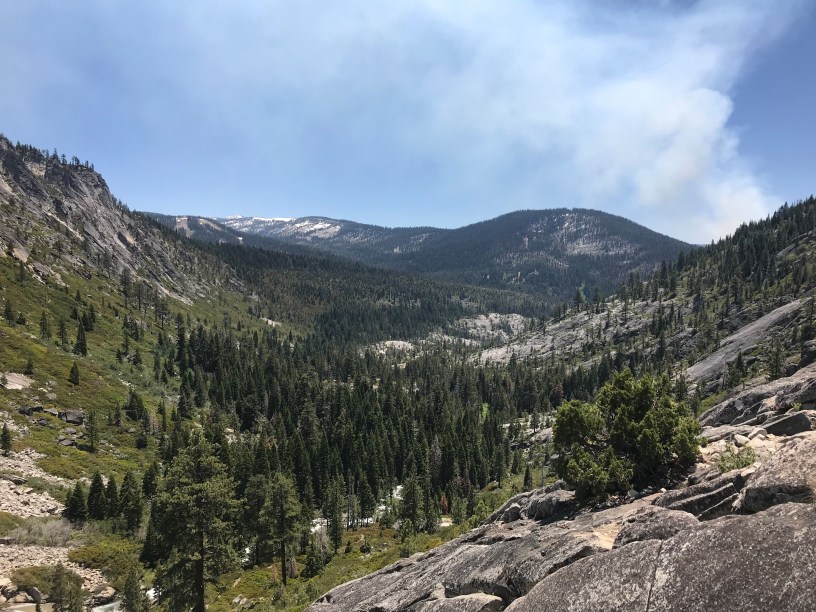
Trying this little psychological experiment with a few friends led to mixed responses. Some people could see very clear comparisons between their answers and their supposed meanings, while others didn’t. My friend had to force herself to not laugh when I said my ideal animal companion would be a dragon (specifically one from an Eragon-esque world), although I was able to draw more connections to that analogy than she expected me to. When I was asked about my favorite aspect of nature in this experiment, my answer was one that wouldn’t surprise anyone who knows me well, or even anyone who has noticed a pattern in all of the photos I’ve posted on this blog, most of which I’ve taken myself on various hikes.
My favorite aspect of nature is mountains. I didn’t grow up in an area that had mountains readily available, but we’d go the Smoky Mountains area fairly often for family vacations and I’ve spent the past few summers exploring the mountains of several different west coast states. When I’m hiking in the mountains I feel a huge sense of peace and awe, and I often spend most of my hike with different worship songs stuck in my head. Mountains, to me, represent an unimaginable vastness and permanence. Mountains, at least over the short lifetimes we have as humans, feel as though they’ve always existed and will continue to do so long after our time is gone. I stand on top of mountains and look out at what is beyond in all directions, from large mountains in the same range, to rivers and lakes, to forests full of trees, down to individual leaves and flowers and animals and everything in between. Surrounding these mountains is all of the life that makes its home with the mountain as its base. Next to this massive, steady, and largely unchanging rock lie countless organisms, microscopic in comparison. On top of a mountain, there is a sense of just how vast and complex the nature that God created truly is. Standing next to mountains, we realize how small we as humans are compared to their massive reach.
It’s pretty clear to see how many comparisons can be drawn between the thoughts that mountains invoke for me and the characteristics of God. He is massive, He is permanent and everlasting, He holds everything in the palm of His hand from the largest mountain to the smallest creature. Comparisons to mountains are all over the bible as well. Psalm 125:2 says “As the mountains surround Jerusalem, so the Lord surrounds his people both now and forevermore,” Psalm 36:6 says “[God’s] righteousness is like the mighty mountains,” and Psalm 90:2 says “before the mountains were born or you brought forth the earth and the world, from everlasting to everlasting you are God.”
However, as permanent as mountains seem to us, they have a beginning and an end. All of creation must. Unlike our minuscule human lifespan, modern science estimates that the life span of a mountain is several hundred million years. This video from National Geographic explains it well. Mountains are formed via the collision or separation of tectonic plates through a process called orogenesis. They are worn down over time due to the effects of erosion and other factors during a process called denudation. This is part of why my second favorite aspect of nature which I described to my friend is the impact that rivers and waterfalls have on landscapes. Torrential forces of water carve through mountain ranges, freezing rainwater expands previously existing cracks in the rock formed by mountains, and acidic rain can leave large caverns in previously unbreakable rock. Eventually, all of this denudation from water and other sources leads to deposition, where mountains are belittled to small hills or nearly flat landscape after millions of years of wear. Just as these massive mountains crumble and fall, so must we. From dust we come and to dust everything must return.
How, then, does the short time we spend here have meaning? How can we be fulfilled in the time we have on earth? That’s been the question running through my mind the past few months. It’s a question some people spend their entire lives trying to answer, and one that’s pretty terrifying for me to wrestle with after just having finished my undergraduate degree and considering my first day of classes for my PhD program is four weeks away.
We ascribe value to material things based on how well they perform the task they were created for. A car is pretty much worthless if it cannot drive. A single gear isn’t much of a gear if it’s simply existing by itself, but as part of a bigger machine it was designed to fit in it can serve a significant purpose which could not be completed without it. A pen is useless if it’s out of ink. Your cell phone is nothing but a camera if it can’t connect to the internet or a cellular network. We wouldn’t find much purpose in a mountain without the knowledge that it is the home of complex ecosystems and can provide us with a vantage point for incredible views of the world around us.
Just like all of these things, we will always feel unfulfilled if we are not serving the purpose we were designed for. Colossians 1:16 says “for by Him all things were created: things in heaven and on earth, visible and invisible, whether thrones or powers or ruler or authorities; all things were created by him and for him.” United Pursuit words it well in “Since Your Love,” singing
I was made by You
I was made for You
I am unfulfilled
Without full communion
Without full communion with God and without walking in the purpose He has called us to, our lives will never feel fulfilled. We chase the next pleasure, the next ambitious distraction, the next affirmation from people we hope will accept us. If we were made for the sole purpose of serving Christ, loving Him and loving others, how can we ever be fulfilled without serving that purpose?
This purpose doesn’t look the same for everyone. Not everyone can be pastors or dedicate their lives to overseas missions, not everyone can be doctors or lawyers or inventors, not everyone can be artists and musicians, and not everyone can do what only you can do. There are specific people called to a multitude of different daily walks; but everyone can love their neighbor. Everyone can love God and serve their church in some capacity. Everyone can spend time in the Word, learning to love God with more of their heart every day. Everyone can spend their life with a heart dedicated to the Lord.
I didn’t know the life I was missing (it’s in Your arms)
I didn’t know the life I was missing (it’s in Your eyes)
When I lived without You
– The Life I Was Missing – Flannel Graph
Everyone has an innate purpose created inside them to serve their savior and creator, Jesus Christ, and everyone has it within themselves to do it. Even me. Even you.
Related Music:
The Life I Was Missing – Flannel Graph
Since Your Love – United Pursuit
 Engineering Christianity
So much to think about! Thanks for sharing your thoughts, insights and truth, Nathan!!! Love blessings and prayers!💜
:: Kathy Bender / iPhone
>
LikeLiked by 1 person