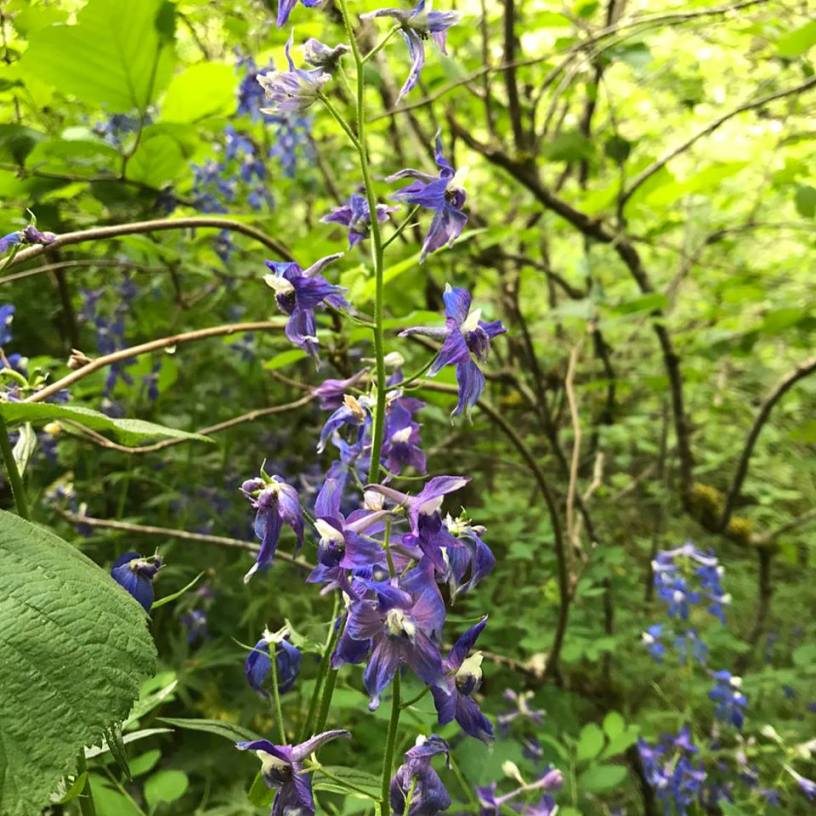
One of the fondest memories I hold from childhood is eating from my grandmother’s garden in the back of my grandparents’ rural, middle-of-nowhere property. After working on puzzles, playing bumper pool on the carport, or playing outside, we could go out to the garden and pick sugar snap peas from the bush or eat kumquats from the small tree that always seemed to be full of them. My grandmother to this day, now in her 80s, still does gardening and landscaping work for people in her retirement community because it’s one of her passions. Her hands are still strong and nimble, pulling up weeds and ensuring every plant in her care thrives.
The Bible uses several different references to gardening, especially in Jesus’ parables, and they’re often some of the most convicting verses to read.
Matthew 13:1-23 tells the parable of the sower who scatters some seed along the path where birds come and eat it up, some on rocky places without much soil, some among thorns, and some on good soil. Jesus explains that the seed is like the word of God being told to men. The seed along the path is like those who hear the Word but do not receive it, so they are snatched away. The rocky soil refers to those who hear the Word and at first receive it with joy, but since they have shallow roots, they fall away after a time. The thorns refer to the “worries of life and the deceitfulness of wealth” which choke out the plant, making it unfruitful. Then, the seed that fell on good soil is describes the man who hears the word and understands it, who bears fruit through his life and his faith.
Jesus tells another parable of the vine and the vinedresser in John 15:1-17. Jesus says “I am the true vine, and my Father is the gardener.” The Father cuts away branches that do not bear fruit, while branches that bear little fruit are pruned so that they are even more fruitful. He states very clearly in verse 4 “Remain in me, and I will remain in you. No branch can bear fruit by itself; it must remain in the vine. Neither can you bear fruit unless you remain in me.” He later goes on to describe both the Father’s judgement and his love, stating that those who obey his commands will remain in his love, “so that [Jesus’] joy may be in you and that your joy may be complete.”
There is some controversy behind the meaning of verse 2 in this parable, which in the NIV says “He cuts off every branch in me that bears no fruit…” The “cutting off” is an interpretation of the Greek verb “airo,” which is often interpreted to mean literal cutting off of the branch, where verse 6 later states that “if anyone does not remain in me, he is like a branch that is thrown away and withers; such branches are picked up, thrown into the fire and burned.” However, other translations also claim that the “airo” verb can be translated to “lift up,” saying that the Father repositions these under-producing branches into a place in which they may bear more fruit, such as a vinedresser lifts up drooping branches to give them more sunlight and nutrition.
Taking these two parables together, they strongly emphasize the importance of remaining in the Father’s presence and digging into his Word. In other words, seeking good soil with which to plant roots, and remaining in the vine which is Christ’s love. A plant with strong roots is not easily moved, and a branch that remains strong in the vine is much more likely to produce fruit. When the birds come to snatch up unrooted seed, when the sun rises and scorches shallow roots, and when weeds and thorns choke out weak plants, those that remain firmly rooted are the ones that remain and continue to thrive.
The phrase my mother and other spiritual mentors I know use to describe this is “remaining plugged into the source of life.” A branch can’t get nutrients without being connected to the vine, and a plant cannot grow without being rooted in good soil. In the same way, we cannot live healthy and fruitful lives while living apart from the promises and fulfilment that comes with Christ’s love.
The part of the story where I personally tend to fall short is in the thorns – not necessarily in the deceitfulness of wealth, but in the busyness of life that chokes out what is truly important. I often struggle with maintaining a good schedule of studying the Word, prayer, etc. due to the time commitments I make with my passions with work and school.
But what I’ve discovered is that without that root, there is no way my passions will ever thrive and keep going on their own.
There was one particular semester last spring where I was taking one of the hardest classes I’ve taken in the electrical engineering curriculum at my university, and I was also just beginning to get involved in research and on the board of two different honors societies. A reality check came when I got my grade back for the first exam in that particular class. The A’s that usually came easy for me weren’t going to come easily this time around. There came a point in the semester where I was totally broken down, not knowing how to continue, not sleeping nearly enough, and not feeling like I was good enough to keep going (shameless plug for last week’s post about being good enough).
Then, I surrendered. I said, okay God, I need some serious help here. I spent more time in the word and focusing on constant prayer and worship throughout the day, and I kept surrendering my control on the situation into God’s hands.
That semester, in spite of being so hard on me mentally and physically with the lack of sleep I was getting, is now one of my favorite ones to this day because of how it helped my faith to grow. That’s what happens when we press into the true vine.
The other aspect of these parables that I’ve heard preached more times than I can count is the Father’s pruning. Pruning, which is the removing of stems and branches to make room for healthy growth, is naturally going to hurt sometimes. Pruning can be hard. It can mean cutting out unhealthy habits or relationships, it can mean carving out time in the day to intentionally focus on Christ and his Word, it can mean changing the way we behave in our daily lives. But, though it sometimes hurts, pruning is ultimately meant for growth. The Father, the good vinedresser, works for the good of the vine and its branches, so that we can grow and produce fruit as a valuable part of the vine.
The key is to accept when God wants to prune something in our lives. Why hang on to a dead branch when it can do nothing to help you grow? The Father loves us, and is always working for our good. So when we see God moving in a way that may mean we have to make some sacrifices, or get uncomfortable, it’s not something to run away from. It’s meant for us to trust in the one who knows far more about what is good for us than we do, and to accept that something that may make us uncomfortable in the short term is going to lead to growth in the long term.
And this is where I again see my grandmother, bending over the plants in her garden, pulling up weeds. Her hands, like the Father’s, are strong and may need to tear some parts off of the plant, but they know what they’re doing. The garden is a place meant to cultivate growth, and no one knows how to make that happen better than the Gardener.
Related Music:
“The Garden” – Needtobreathe
“I Am a Seed” – David Crowder Band
“Lay It All Down” – Will Reagan & United Pursuit
 Engineering Christianity
What a blessing to read your article, Nathan! May God continue to use you! Grandma and Grandpa
LikeLiked by 1 person